


Today’s fluctuating talent market isn’t exclusive to the corporate world. The great resignation has also affected trade positions such as electricians, plumbers, and construction workers. While the conversation on attracting and retaining talent in the corporate world has been actively discussed, we want to extend the conversation to the industrial workforce.
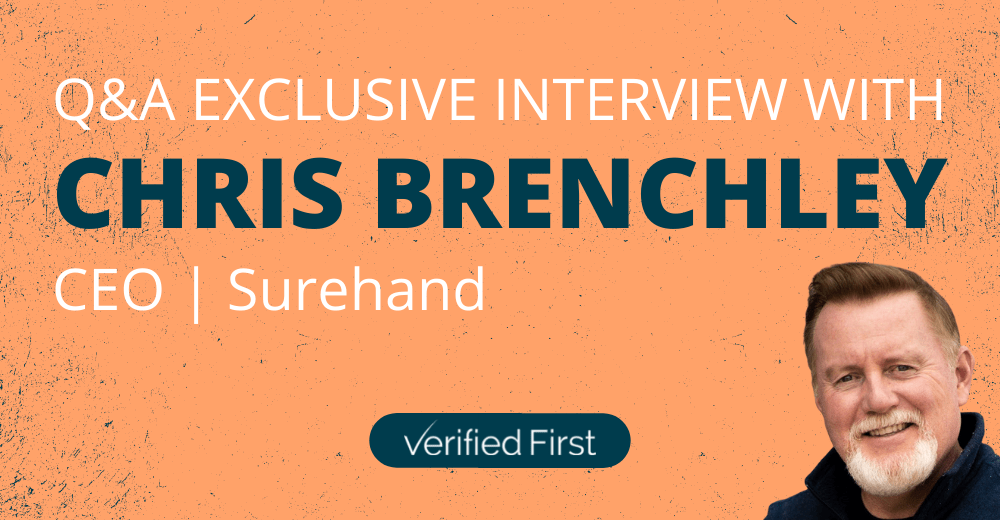
In February’s episode of HR at the Table, Verified First hosted Chris Brenchley, Co-founder and CEO at Surehand. Together, we discussed the talent market in the industrial workforce in episode 2, “The New Talent Landscape: Rock the Trades.”
Chris gave incredible insight into the Rock the Trades movement and highlighted three important questions that trade industry leaders should discuss in order to attract and retain talent.
COVID-19 affected the industrial talent market in similar ways to the corporate market. The U.S. Bureau of Labor Statistics reported that the manufacturing industry lost 9.4 million nonfarm jobs in 2020. While there’s been a steady climb in manufacturing employment rates in 2022, it’s not anywhere near pre-Covid numbers.
In fact, this gap in labor workers could leave as many as 2.1 million jobs unfilled by 2030, according to a recent study. The great resignation and the increase in retirement rates also correlate to the need for more trade industry workers.
While these numbers point to obvious gaps in the talent market, Chris sees the need for industrial workers as a great opportunity for the younger generations. “There was a problem with the interest in skilled trades, but with the Baby Boomers moving out of the workforce, the need has never been greater…With the newer generation of workers entering the trades workforce, there’s the huge opportunity for fulfilling careers and upward mobility.”
It’s clear that the need for industrial workers is there. However, preconceived notions about trade positions must be combatted to establish the importance of trade careers.
“There’s no white-collar world without blue-collar workers,” Chris said. “In order to make a difference, we need to understand the narrative [associated with industry careers] and rewrite it to view the industrial workforce as important career paths.”
Changing the perspective on the trade industry starts with the employers – you! Chris mentioned how employers today can look for skills gaps in their workforce and build learning opportunities and apprenticeships as a way to appeal to candidates. In fact, new learning opportunities are what candidates search for. The Harvard Business Review stated that opportunities for development in-house are the second most important factor in workplace happiness. The prospect of upward mobility and learning opportunities covered by the employer tells candidates that your company will nurture their talents and help grow their careers.
Attracting top talent to any position is hard in today’s current market, and that’s true of the trade industry, too. While the white-collar and blue-collar working worlds require different skill sets, the desired quality and characteristics of candidates are uniform to both.
According to Chris, candidates with defined soft skills are what stand out in the trade industry profession. Training workers to acquire specific trades skills is dependent on the level of their soft skills. TA and HR professionals should identify the strengths of soft skills early on in the candidate pipeline. Such skills include:
Of those candidates with strong soft skills, Chris identified a uniting factor on what they want out of their employer. “Industrial employers need to shift their focus to mission and purpose when attracting and retaining talent.” When companies establish their mission statement as a pillar of the company in introductory applicant phases, the candidates are able to connect the purpose of the open position with the overall organization’s goals.
For more insight from Surehand’s Co-founder and CEO, Chris Brenchley, check out season 2 episode 3 of our HR at the Table webinar series. In episode three, you can be a part of the conversation on answering candidate demands with Lindsey Linder at Perlick Corporation. Save your spot today!

We are proud members of the Professional Background Screening Association (PBSA)
Verified First is NIST 800-53 compliant.
© 2026 Verified First, LLC | Privacy Policy | Legal


